• I’m currently reading The Energy of Prayer by Thich Nhat Hanh. Like his other books, it’s thoughtful and gentle. But this one, in particular, has landed deeply for me.

    What resonates most is the way he speaks about spirituality without dogma. It’s not about what you’re supposed to believe, but about how you live, breathe, and relate to the world around you. At times he even seems to view the world through an animist lens as I do. When he speaks of a pine tree as “real,” or even of speaking your thoughts to it, I understand exactly what he means. Nothing exists in isolation. Nothing arises on its own. These aren’t abstract ideas for me, they’ve shaped how I move through my life and how I heal.

    I’ve written before about the heart palpitations that developed during my withdrawal from benzodiazepines, and the fear they bring with them. What I’m slowly understanding is how tightly my emotional state is tied to them. Anxiety leads to palpitations, palpitations lead to fear, and fear feeds the anxiety right back again. It’s a vicious cycle. A loop. When your heart is skipping every second or third beat for fifteen or twenty minutes or longer, “just staying calm” isn’t exactly simple.

    This is where Hanh’s words help me in a very real way.

    He was a man who knew hardship deeply, yet lived with remarkable steadiness and compassion. Through his writing and Dharma talks, he continues to help people long after his passing. His words don’t just comfort me spiritually, they calm my body. They ground me. They slow my breath to a natural rhythm.

    During protracted withdrawal symptoms, my breathing has become shallow, almost without my noticing. Anxiety makes it worse. Trying to force myself to breathe deeply never works. The body knows when it’s being lied to. But reading Hanh’s words brings a calm that’s genuine. My breathing returns on its own. Nothing is forced. The calm is real, and the body recognizes it as real.

    For me, spirituality isn’t optional. It’s not a hobby or an abstract interest, it’s woven into my healing and my survival. It’s woven into my very being. And what I appreciate most about this book is that it doesn’t require anyone to change their beliefs, or even have beliefs at all. Hanh had deep respect for all traditions, and that respect is present on every page.

    Regardless of your beliefs, or lack thereof, I wholeheartedly recommend this book.

    When I am calm
    I remember that I am held.
    In peace I remember I am worthy,
    that I am not “beyond help”.
    In love I remember that
    I too am loved.

    ~Buck

  • Daily writing prompt
    What skills or lessons have you learned recently?

    I’ll be sixty years old in a few short months, and I can say without hesitation that I’ve learned more about myself in the past year and a half than at any other point in my life.

    I’ve learned how to face fear.
    How to endure intense physical pain.
    How to survive withdrawal, not just medically, but emotionally and spiritually.

    I was taking high doses of benzodiazepines daily for over twenty years, and before that, I relied on alcohol. In truth, I spent most of my life in active addiction, beginning as far back as seventh grade. Now, for the first time since childhood, I am free.

    But this freedom came at a heavy cost.

    Next month will mark one full year free of all substances. This last year has been a strange mixture of pure hell and moments of profound beauty and peace. Getting off alcohol was brutally hard. Getting off benzodiazepines was something else entirely. Worse.

    Benzo withdrawal hurt me in ways I never could have imagined. I’m grateful I didn’t know how bad it would be when I started tapering, because if I had, I might never have begun. I didn’t know it would trigger a heart arrhythmia, multifocal PVCs, sometimes in frightening clusters. I didn’t know it would throw my nervous system so far into overdrive that my body became rigid, making it painful and difficult just to walk. I didn’t know it would worsen my type 2 diabetes and make it far harder to control.

    There’s a lot I didn’t know.

    But there is also a lot I learned.

    I learned patience, something I previously had almost none of. I learned how to cherish moments of beauty when they appear, and how to hold them close during the darkest stretches. I learned how to ask for help, something my pride once refused to allow.

    I learned that while I was numbed by benzos, I wasn’t truly seeing my own life. I wasn’t able to process my experiences, my beliefs, or even myself. I simply existed. And existing is not the same as living.

    Coming out of that chemically induced fog introduced me to myself.

    I came to terms with the fact that I never truly believed many of the things I was taught to believe in my youth. I see the world now through an animist and Buddhist lens, and I learned that this is not something to be ashamed of. It’s honesty. I am no longer lying to myself in an effort to fit into a belief system or culture that never truly felt like home.

    I learned to cherish my family in a way I always should have, but couldn’t, not fully, while numbed by drugs and alcohol. I learned that life is precious, fragile, and never to be taken for granted. I learned to care for my health with the seriousness it deserves, because it is far too easy to take your good health for granted until it’s gone.

    Seven years ago, when I was diagnosed with diabetes, it got my attention, but not deeply enough. I was still buffered by drugs, still insulated from reality. Now, without any chemical “safety net,” I’ve learned how to confront painful memories and difficult truths without drowning them in alcohol or blasting them away with pills.

    I’ve learned how to be present, really present, with the people I love.
     I’ve learned how to listen.

    And in the simplest, most meaningful sense of the word, I’ve learned how to live.

    May we learn, even late in life, that it is never too late to live honestly, to love deeply,
    and to meet each day awake, present, and unafraid to feel.

    ~Buck

  • I’ve been thinking a lot lately about how sound has helped me heal. At almost a year off benzos now, my nervous system is still relearning how to be at peace. And what surprises me, maybe more than anything else, is that one of the most powerful tools I’ve found for recovery isn’t modern or medical. And it certainly isn’t pharmaceutical.

    It’s sound. Simple, human sound. Breath shaped into rhythm. A chant, a whisper, and/or a repeated phrase.

    And the more I study early cultures like Anglo-Saxon, Germanic, Norse, (because those are my ancestors) the more I realize this wasn’t an accident. Sound was one of their oldest forms of healing. It wasn’t called “therapy” or “mindfulness,” but it was something very close. I’ve started thinking of these practices as spiritual technology, the kind our ancestors built long before pills and prescriptions existed.

    What I Mean by “Spiritual Technology”

    When ancient cultures needed calm, grounding, safety, or clarity, they turned to practices built on;

    • vibration
    • breath
    • rhythm
    • intention
    • spoken word
    • connection to something larger

    These weren’t superstitions. They were finely tuned tools for emotional regulation, discovered, refined, and passed down over generations.

    The Anglo-Saxons used galdor (galdr), rhythmic chants and spoken invocations that steadied the breath and brought the mind back from fear. The Norse would “call the hugr home,” gathering scattered thoughts by using repeated sound. And in Chinese Pure Land Buddhism, which I also practice, nianfo (“Namo Amituofo”) works in the same way. It brings my attention out of the panic spiral and into something bigger, steadier, and kinder. Of course, galdor or galdr was also used for magical purposes whereas nianfo was/is not, they both can soothe the spirit and bring calm.

    Different cultures, same wisdom.

    Why Sound Works

    You don’t have to believe anything mystical for this to work or make sense. The human nervous system responds directly to slow exhalation and chest vibration. It also responds to predictable rhythms, repetitive sound, and a soothing cadence.

    Chanting sends a message to the body that words alone can’t deliver. It tells your nervous system that you’re safe now, you don’t have to be ready to fight right now. This is extremely important because it helps break the self-feeding loop of fear/dread/fight-or-flight.

    Sound bypasses the overthinking part of the brain and goes straight to the places where fear lives.

    A Personal Reflection

    I was on a very high dose of benzos for more than twenty years. Eight pills a day. It numbed everything. It stopped the nightmares from PTSD, yes, but also numbed joy, clarity, connection, and even life itself. No one taught me healthier ways to cope. No one gave me tools. They just gave me pills.

    Now, almost a year off benzos, I’m slowly rebuilding my nervous system using practices that humans used for thousands of years before modern medicine existed.

    It turns out those “primitive” tools like breath, chant, and spoken rhythm are some of the most powerful technologies we’ve ever created.

    May the old wisdom steady your breath, and may every sound that leaves your lips lead you gently back toward peace.

    ~Buck

  • A Moment That Changed Everything

    Back in 2011 something happened that altered the course of my life and quietly anchored the animist way I now understand the world.

    I have sleep apnea, and at that time I didn’t yet have a CPAP machine. Falling asleep on my back has always been dangerous because it worsens the collapse of my airway. Normally I would jolt awake gasping, my throat opening enough to save me. But that night didn’t go the way nights normally went.

    I woke because my throat had sealed completely shut. I tried to inhale but I couldn’t. My lungs were burning, my heart was pounding and racing and my head throbbed. My vision narrowed into a tunnel of darkness. I knew I was passing out and I knew I was in trouble. I was panicking.

    I fell back onto my back as the world turned black, and my vision now shrinking to a single pinpoint. Time felt like it folded in on itself, a few seconds stretching out into what felt like an eternity.

    And then something seemingly impossible happened.

    The Golden Symbol in the Darkness

    Out of that blackness, something came flying toward me so fast it was frightening. A flaming, golden symbol I had never seen before. It grew rapidly larger, flying straight at me. Just as it slammed into my body, my airway opened and air flooded in. I was sucking air like I never had before.

    Maybe I lost consciousness, maybe I hung on by a thread, I don’t know. I can’t say for sure. But I bolted upright gasping, drinking in air like I had just been saved from drowning.

    The next morning, that symbol was still definitely in my thoughts. I had to find out what it was, if anything. This was around the time Google had released its new “search by image” feature, so I opened GIMP, drew the symbol I had seen, and uploaded it. The result amazed me when I read what it meant.

    It was the Ansuz rune. The rune of divine breath. The rune of divine communication. A rune closely associated with Odin.

    I didn’t even know what runes were in 2011. This was before the series Vikings was on TV, before runes were all the rage and pop-culture décor. But this rune, the rune tied to breath and spirit, is the one that appeared in the very moment I could not breathe and was rapidly fading. I don’t try to find an explanation anymore. It happened and I’m alive because it did.

    A Pathway Opens

    That experience sent me exploring the cultures who used these runes. The Scandinavians, the continental Germanic peoples, the Anglo-Saxons, and the ancient Dutch. I learned their myths and stories and about their gods like Odin/Woden, Thor/Thunar, and many others.

    But I never came to see those gods as distant, abstract beings, not the way the Christian god of my childhood was presented. Instead, I saw them through my already-rooted animist lens. Thor/Thunar isn’t only a god of storms, he is the storm, or its raw power. Odin/Woden isn’t merely a god of inspiration, he is the current of inspiration itself.

    The runes, too, are more than symbols to me. They aren’t just representations, they embody the things they represent.

    So when Ansuz slammed into me that night and my breath returned, I took it as an actual encounter, woven into the fabric of my own consciousness and lived experience.

    Consciousness, Cosmos, and the Living World

    Almost my entire life I’ve believed that there is more to this universe than what can be seen or measured. I don’t think consciousness is just a side effect of brain tissue. To me, consciousness is as fundamental as gravity or electromagnetism, a basic property of reality itself.

    Some scientists call this view panpsychism or scientific panpsychism. The idea that consciousness is a fundamental feature of the cosmos, not an accident or some “afterthought”.

    So when I sit in the mountains and a deer watches me, or a raven tilts its head toward me, I feel consciousness meeting consciousness. I feel agency looking back. Spirit looking back.

    They aren’t just “biological machines,” not to me. And that gives me great comfort.

    May breath return gently to your body whenever the world grows dark.
     May symbols rise to meet you in the moments you most need them.
     May the living cosmos speak to you in its quiet language,
     and may you always recognize yourself in its voice.

    ~ Buck

  • It’s far too easy to become distracted by everything that’s wrong in the world. So easy, in fact, that it can blot out everything that’s still good. With so many news companies competing for our attention, we’re inundated with headlines from the moment we wake up, unless we take steps to protect ourselves.

    For me, it became overwhelming. Not the stories themselves, but simply seeing the headlines over and over. I finally set my browser homepage to a site that shows no news at all. I spend a lot of time at my computer writing, for my blogs, for others, and for my own healing, and I don’t want to be bombarded with news everywhere I go online. Creating that boundary has helped my well-being more than I expected, especially during withdrawal.

    What anchors me most, though, is spending as much time as I can outdoors in the sacred landscape that surrounds my home. These mountains keep me sane in a world that can feel utterly insane. They are ancient, steady, and unmoved by the chaos of our brief and anxious lives. They’ve watched countless generations come and go, and still they stand… calm, quiet, and patient.

    There is one particular range here that I return to again and again. A single spot on that ridge has become my refuge whenever a wave hits, those sudden, brutal returns of withdrawal symptoms. It is so profoundly healing that I call it my LyfjabergHealing Mountain.

    When I’m there, tension leaves my body almost immediately. My mind settles. My heart stops its chaotic stutter, the multifocal PVCs that benzo withdrawal carved into me, and falls into a slow, steady and healthy rhythm again.

    I watch the ravens circling overhead, calling out as if welcoming me back. I watch deer move through the trees with the silence of ghosts. I breathe the crisp, clean air and feel it soothe my spirit in a way nothing else can.

    That place has never failed me, even during the very worst of withdrawal.

    I’ve written before over at Whispering Wyrd about how difficult getting off benzos was after more than twenty years of heavy use, but there are no words in any language that can fully convey what it does to a person. I thought getting off alcohol was hard. And it was. But benzos were harder. I had two seizures. I developed PVCs that came in frightening runs, sometimes fifteen minutes, and once, three hours. Withdrawal sent me to the ER twice. It was hell.

    But the mountains kept healing me.
     And without my wife, my sons, and those sacred peaks, I know I wouldn’t have made it through.

    Now, at almost sixty years old, I am free of alcohol and drugs. The journey was brutal, but I’m still here, still healing, still walking toward peace, one breath and one step at a time.

    Whatever you’re going through, I wish you peace, good health, and happiness. I hope you have, or someday find, your own personal Lyfjaberg, even if it isn’t an actual mountain.

    May the quiet breath of the mountains steady your own.
    May every step you take bring your spirit a little more ease.
    May your heart beat in its true rhythm—slow, strong, and unafraid.
    And may whatever burdens you carry grow lighter with each new dawn.
    May you walk in peace, and may peace walk with you.

    ~Buck

  • I’m back home in Santa Fe after spending a week in Texas visiting family. Seeing everyone again after so long was genuinely wonderful. Family almost always is. But Texas itself, at least the part we were in, hasn’t changed except to get worse. Internet speeds still crawl just barely above dial-up (not a joke), the population has exploded while the infrastructure hasn’t even tried to keep up, and everything looks old, tired, and worn down.

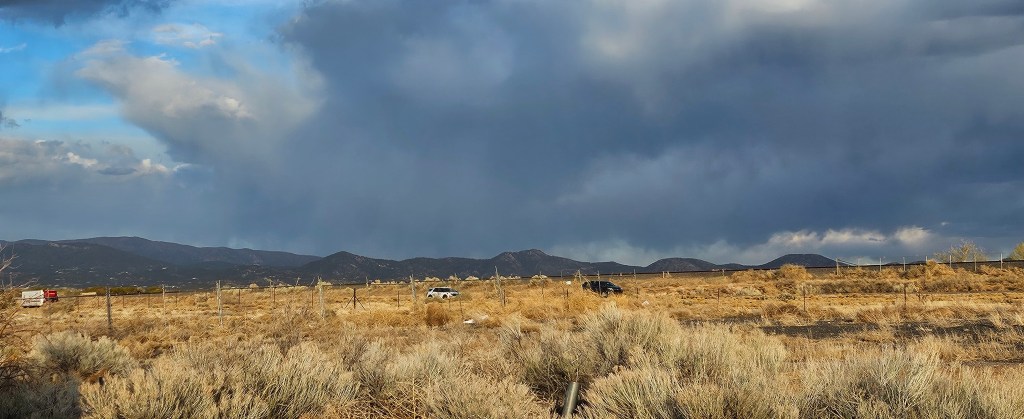
    But now I am home again. And the moment we crossed into New Mexico, I felt the land exhale and I exhaled with it. As soon as we crossed into New Mexico the skies actually cleared. It had been cloudy and dreary the rest of the trip. That seemed very fitting.

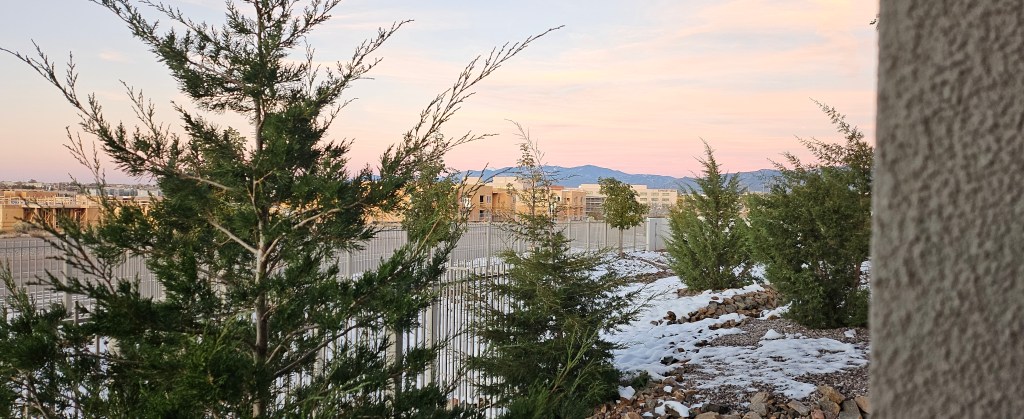
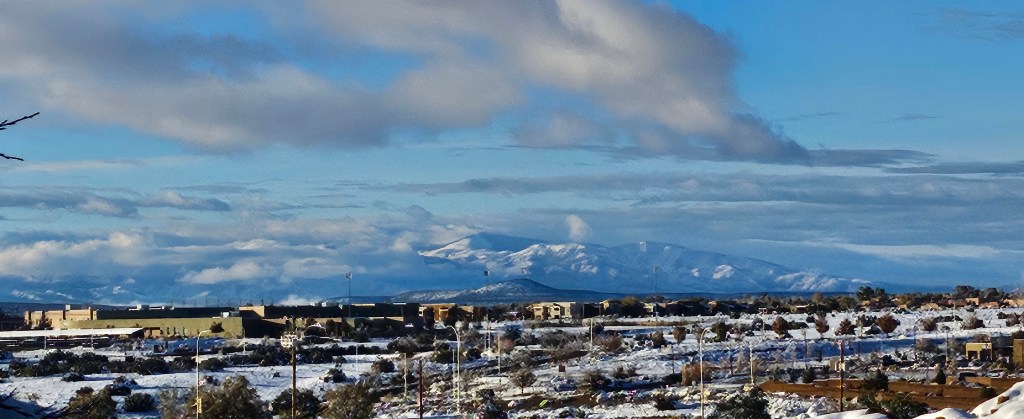
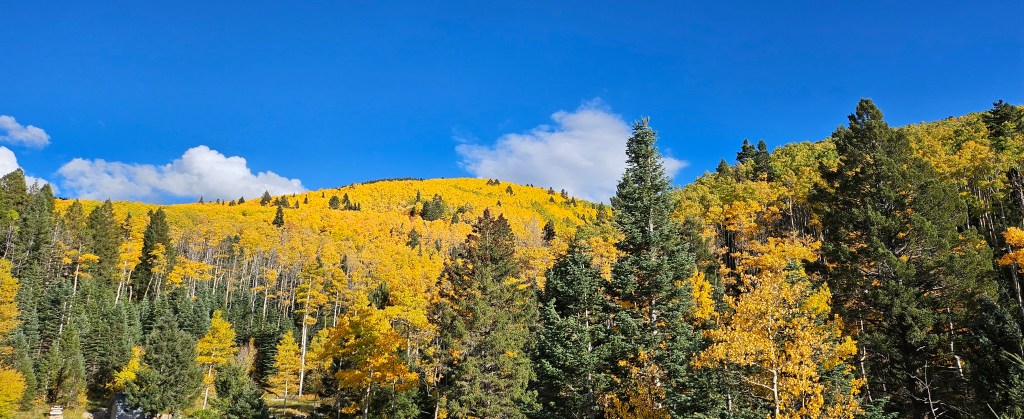
    The mountains are crowned with fresh snow, the air is clean and sharp, and this sacred landscape embraced me the way it always does. I feel like I’ve stepped back into both civilization and sacredness. I’m sore and exhausted from driving nearly 600 miles each way, but the heaviness of Texas has already lifted off my shoulders.

    The truth is, the things my wife and I had once romanticized about that little (now not-so-little) Texas town simply aren’t there anymore. People feel ruder. The “slower pace of life” is gone. Many of the places we loved are falling into disrepair or have disappeared completely. Whatever charm it once had has faded into a memory.

    The only thing that place still has going for it is the relatively low violent-crime rate. I won’t pretend New Mexico is perfect, it has real issues with drugs and violence. Even the nearest Texas city to where we stayed has a far lower rate than comparable cities here. But even knowing that I would not trade this place. Not for a moment. These mountains, these skies, they heal me in ways I still struggle to put into words.

    And speaking of healing, I’m sorry I haven’t written in a while. This last “wave” of benzo withdrawal hit me harder than any before it, and it leveled me for a while. Then came the Texas trip. But I’m home again now, in the place where my spirit steadies itself, and I’m hoping to dive back into all the ideas I had before the wave rolled in.

    Thank you for being here with me through the quiet spells and the storms.

    ~Buck

  • My grandmother had little in the way of formal education by today’s standards. She didn’t get a 4-year college degree. She never owned a car. My grandparents had an outhouse until my father and his brothers finally built them an indoor bathroom. She didn’t get a telephone until I was already a teenager.

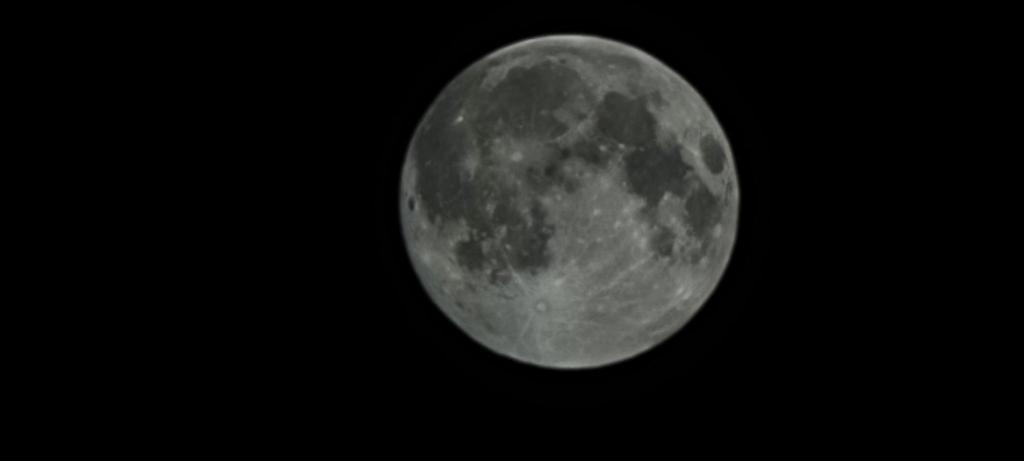
    And yet my grandmother knew the moon.

    She knew which days were best for planting and which ones weren’t. She knew when the weather was about to turn, even when the sky still looked calm to everyone else. She could step outside, feel the air against her skin, and seem to read something written there , something invisible to most of us.

    She never called it wisdom. She never tried to teach it in any formal way. She simply lived it.

    When my mother was pregnant with me, my grandmother told her the exact day I would be born, not based on a doctor’s prediction or a calendar, but on the phase of the moon. And she was right! To this day, I still think about that, half in disbelief and half in reverence.

    I was born during the new moon, in the quiet darkness just before the light begins again, the time of endings and beginnings living on the same breath.

    I don’t believe that the moon determines a person’s entire life. I don’t think our paths are written in stone by the sky. But I do believe the moon holds memory. I believe it carries rhythm. And I believe that some people, like my grandmother, learned to listen and gained much wisdom.

    She didn’t read books about weather patterns or lunar cycles. She watched. She paid attention. She lived close enough to the land that the land spoke back to her.

    She watched the animals, the clouds, the soil, and the way the wind moved through the trees. Over a lifetime, that observation became ways of knowing.

    There is a kind of intelligence that doesn’t come from schools. It comes from relationships. It comes from being in conversation with the living world.

    I didn’t realize the depth of her knowledge while she was alive. Like so many things in my youth, I took it for granted. I didn’t think to ask her how she knew. I didn’t sit beside her and say, “Teach me your ways”. I simply assumed she would always be there, as steady as the moon itself.

    Now she is gone, but I find myself thinking of her more and more as I walk beneath the night sky. Especially when the moon is new. Especially when the world is quiet.

    I like to imagine she is still teaching me, in her own way, through the passing of time, through the turning of the sky, and through the memory that lives on in my heart and in my bones.

    I see now that her wisdom was never meant to be written down. It was meant to be lived.

    And maybe, in some mysterious way, it still is.

    ~Buck

    Photo Credit: My son, Ty Britt

  • I think almost everyone carries their own “demons,” as people like to call them. Trauma. Old wounds. Memories that refuse to sleep.

    For some, those demons are quiet enough to coexist with. For others, they interfere with the very ability to function, to rest, to think clearly, to feel safe in the world.

    For better or worse, I fall into that second category. Especially lately.

    I am now ten months free from benzodiazepines, after more than twenty years of use. Before that, there was alcohol. I will be sixty years old in a few short months, and it has taken me nearly a lifetime to stop using chemicals to cope with what I have seen… and with what I have done. With the things I thought I had buried, but which were only waiting.

    Right now, I am in the midst of what many in the withdrawal community call a “wave”, the return of symptoms after a period of improvement. This one is, without question, the worst I have experienced.

    The heart palpitations are back. The full-body tension is back. And, probably hardest of all, the nightmares have returned in full force.

    Sleep feels impossible. When I do finally drift off from sheer exhaustion, the nightmares are waiting. They pull me back into those times and places so vividly that it feels real, like I have stepped through a door instead of waking up in my own bed. I wake with my heart racing, pounding so hard I’m afraid it will give out. The fear then fuels the palpitations. And so the cycle begins again. In the midst of all this, I long for peace. I pray for it.

    I walk outside,
    breathe the night,
    and let the night breathe me.

    I bow my head and cry.
    I want to scream, “Why?”
    But I know there is no answer waiting.

    Suffocating beneath fear,
    as though fear itself were a noose.

    Still, somehow, I keep going.

    I muster all the strength I can to move forward, moment by moment, breath by breath. I have a wife and three grown sons. I love them more than words can hold, and I do not want to burden them with the battle that rages inside me. They have already seen me through the darkest depths of withdrawal, and it was not easy for any of us.

    So I carry it quietly when I can. I write. I pray. I breathe. I endure.

    And if you are walking with your own demons tonight, please hear this:
     Don’t stop. Do not surrender to them. Stay stubborn. Stay soft where it matters. Stay compassionate, especially with yourself.

    You are still here. And that means something sacred is still at work within you.

    ~Buck

  • Hello, dear readers.

    First, I want to apologize for the recent silence on this blog. The truth is, I’ve been navigating a “wave”, a term many in recovery use for the frustrating return of withdrawal symptoms after you think the worst is behind you.

    My Journey, Briefly

    For over two decades, I was dependent on benzodiazepines, following an earlier struggle with alcohol. It wasn’t until I was almost 60 that I found the courage to get clean. They say “better late than never,” and I’m holding onto that truth with both hands.

    Let me be real here, quitting benzos has been the hardest fight of my life. Even with a careful, doctor-supervised taper, my body rebelled violently. I endured two seizures, a terrifying heart condition called multifocal PVCs, and such severe muscle stiffness that walking became a monumental effort.

    Where I Am Now

    At just over ten months free from the drugs, I am in a much better place now. The progress is real. But this current wave, with its brain fog, physical symptoms, and nightmares, has reminded me that healing is not a straight line. It has temporarily stolen my ability to focus and write clearly.

    A Promise and a Word of Hope

    I miss this space and I will return to writing regularly as soon as this wave passes. Your patience and understanding would mean the world to me.

    And if you are reading this while in the thick of your own withdrawal, from benzos or anything else, I want you to hear this… You can do this. It is brutal and it is unfair, but the freedom on the other side is worth every ounce of the struggle. You are doing this for yourself, and the ripple effect of your strength will touch everyone around you.

    There are people cheering for you, and I am proudly one of them.

    ~Buck

  • Daily writing prompt
    If you could live anywhere in the world, where would it be?

    I don’t usually join the daily writing prompts, but this one speaks directly to my heart. Because the truth is simple… A place of breathtaking beauty, and for me, a place of profound healing. Right here where I have lived for the last 5 years.

    I’ll be 60 years old in a few months. For most of my life until the last five years, I lived in utter despair. Severe clinical depression and addiction held me captive. First alcohol, then benzodiazepines. I tried again and again to get free back in Texas, but I couldn’t. The rural area where I lived was toxic to me. No one I knew seemed happy. Numbness, induced by substances, felt like the only way to survive. I didn’t live there, I merely existed.

    Moving to the mountains of northern New Mexico saved my life. I had visited this place since childhood, and it was the only place I ever felt truly happy. I grew up dreaming of living here. And when I finally arrived, that dream became a kind of homecoming my soul had been waiting for.

    Living here gave me the strength to heal. It’s where I finally broke free from everything that held me down. Getting off alcohol was hard. Getting off benzos after more than 20 years of daily, high-dose use was the hardest thing I have ever done. The year-long taper hurt in ways I didn’t think a person could survive. Two seizures. BIND (benzodiazepine-induced neurological dysfunction). Multifocal PVCs, terrifying heart rhythms. Muscles so stiff I could barely walk. There were days I wasn’t sure I would make it through.

    But now, ten months free, I am healing. For the first time since 7th grade,when I took my first drink, I feel whole again. These mountains, this sacred landscape, gave me what Texas never could… hope, strength, and a path forward.

    Here, the world is alive. The rivers sing. The mountains stand watch. Ravens circle overhead with messages from older times. The forests remember. Even the Earth beneath my feet whispers its quiet healing as I walk gently across it.

    This place of mystery, beauty, and deep, patient healing is where I always wanted to live. And now that I’m finally here, I wake every morning with joy in my heart, and every night I go to bed knowing I am home. Healing is possible!

    ~Buck